
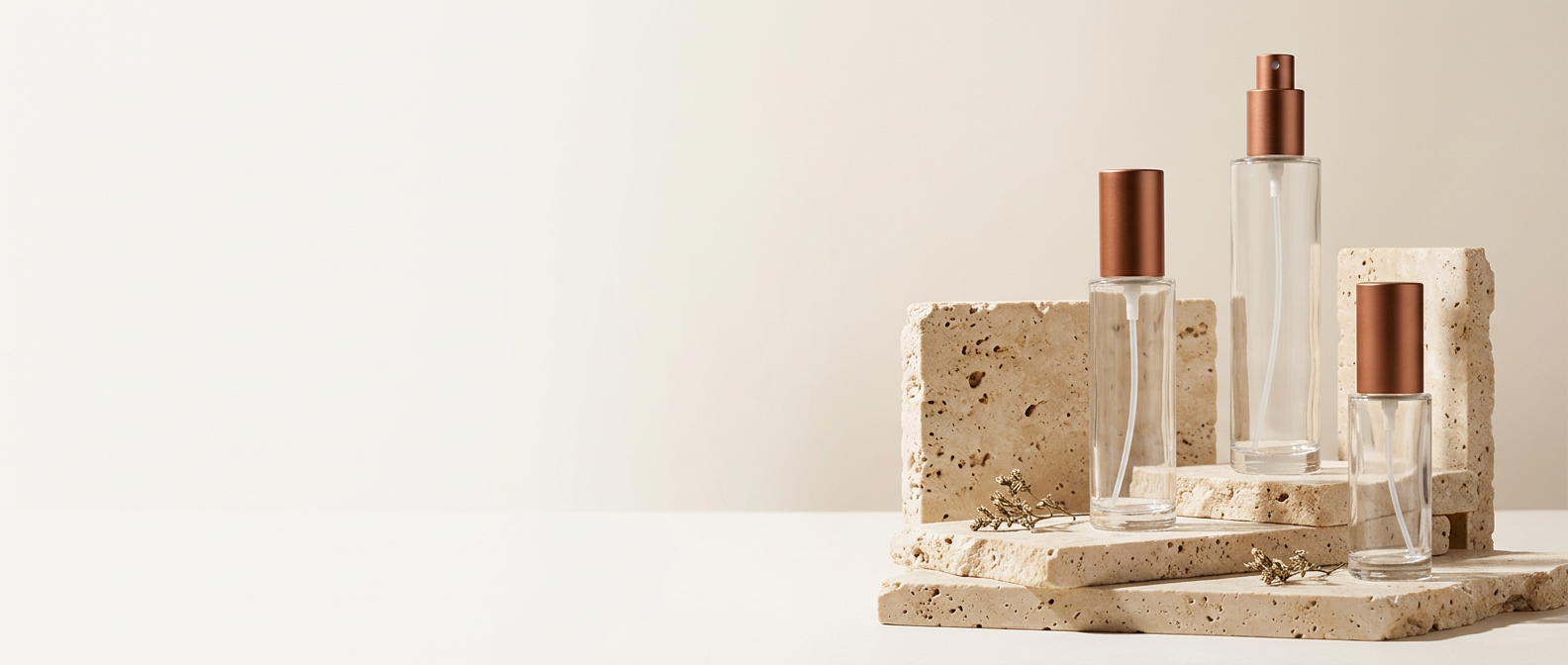
Consumers assign quality to the packaging before they engage with the product—in three seconds or less—and the bottle you choose will make or break your brand before anyone smells what's inside.
Shelf psychology is real. The consumer decision happens before they read a word. Two identical formulas in two different bottles will command two different price points. The material choice signals brand tier instantly: glass reads premium, plastic reads mass-market.
Think about the last time you picked up a product in a store. Your hand registered the weight before your eye read the label. The cap clicked shut with a certain resonance—or it didn't. Those micro-moments are where the sale happens. Packaging is not decoration. It is the first sale.
The three-second rule is not marketing folklore. Studies on consumer behavior consistently show that visual and tactile cues drive purchase decisions before rational evaluation kicks in. Your bottle is doing the talking before your customer has a chance to think.
Glass versus plastic is the clearest signal. Glass communicates permanence, purity, and care. Plastic communicates convenience and cost. There is nothing wrong with plastic for certain applications—but if you are positioning as premium, the material choice undermines or supports that claim before the product is ever used.
Best Bottles supplies the same glass bottles to brands sold at Ulta and Whole Foods. That is not an accident. The practitioner angle matters: we use what we sell. The bottles available on bestbottles.com go into Nemat's retail line. When you order from Best Bottles, you inherit that credibility.
The bestbottles.com catalog offers 2,300+ variants across 27 bottle families for fragrance, skincare, essential oils, and wellness brands. Browse by application—Boston Round for essential oils, Euro dropper for fine fragrance, serum vials for clinical skincare—and find the bottle that does the selling for you.